
Whoa! I opened my browser extension that morning, curious and a little wary. There was a nagging sense that somethin’ wasn’t quite locked down. Initially I thought it was just me being paranoid, but then I dug into transaction prompts, UI cues, and the way chain switching was handled, and I realized the risk surface was broader than a single insecure dApp call. My instinct said: tighten up your setup before you click anything.
Seriously? Extensions are convenient, obviously, but convenience breeds complacency more often than not. People use them for multi-chain access without realizing the permission model. On one hand a wallet that supports many chains reduces friction for swapping and yield farming, though actually, wait—let me rephrase that, since cross-chain convenience increases attack vectors if the extension mediates risky approvals or silently redirects RPC calls. I started testing a few wallets, sending tiny transactions, watching gas estimation quirks and approval flows, and slowly a pattern emerged where subtle UI choices nudged me toward unsafe habits even when the backend was fine, which was eye-opening.
Hmm… A solid browser wallet gets two things right: permission clarity and transaction transparency. Notifications should explain what a dApp asks for, not bury it in dense text. And chain switching prompts must be unmistakable with clear consequences shown to users. That’s why wallet UX matters at a protocol level: a tiny ambiguous button can turn a harmless approval into a multi-step exploit if users aren’t guided, so security thinking has to start in the extension’s copywriting and UI affordances, not just in smart contracts.
Wow! I tested Rabby against a few popular alternatives over several sessions. My instinct said the extension was more explicit about approvals. Initially I thought it was a marginal UX win, but after monitoring how it surfaces token approvals and simulates transaction outcomes, I realized it materially reduces risky clicks by reducing ambiguity. I won’t pretend it’s perfect; I found edge cases around custom RPCs and complex aggregators, which reminded me that tool choice is only part of a secure posture and vigilance must live with users and builders alike.
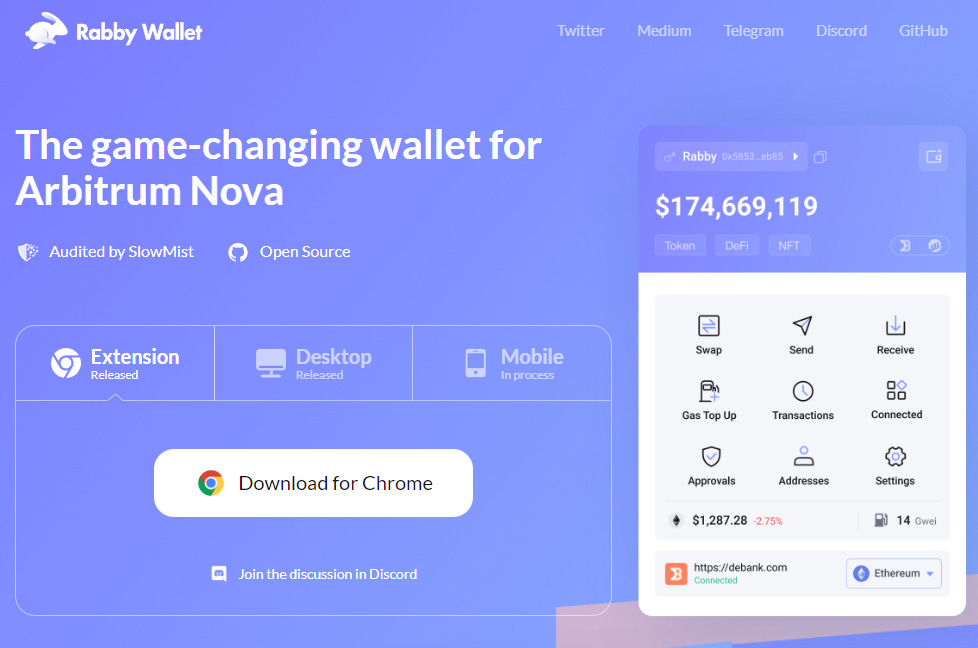
Really? Yes, there’s a learning curve but it’s manageable with good defaults. One big tip: lock your extension when idle and use a hardware key. Also audit connected sites and revoke unused approvals regularly. I kept a tiny spreadsheet of approvals at first and that habit made it obvious which dApps were being lazy about minimal permissions, and the pattern let me prune a handful of risky connections fast.
Try Rabby — practical next step
Okay, so check this out— Rabby offers multi-chain support; try a rabby wallet download from the official site. It attempts to show exactly what will happen on the active chain. On the analytical side, that reduces cognitive load during cross-chain swaps and lowers error rates for novices, even though sophisticated attackers may still find blind spots in aggregated approvals and signature flows. I ran simulated attacks in a controlled environment to see how Rabby responded to malformed approvals and to test RPC fallback behavior, and the logs helped me evaluate whether the extension would have flagged or blocked suspicious actions in production scenarios.
I’m biased, but… Practical security is a mix of tech and habits. Use wallet settings to limit auto-approvals and set gas limits where possible. Back up your seed, but split it and store pieces offline. On one hand you can’t secure everything perfectly, though actually the goal is risk reduction: adopt layered defenses (hardware keys, curated extensions, site allowlists) so that a single browser exploit doesn’t drain your whole portfolio.
Here’s the thing. If you want to try a well-designed multi-chain extension, start small. Download the extension from the official source and inspect permissions closely. I recommend the Rabby build for many users because it balances clarity and control, but actually, wait—let me rephrase that: it’s a strong option for people who want explicit permission flows and multi-chain convenience without a spaghetti mess of hidden approvals. Try small transfers first, read prompts slowly, and when in doubt consult community audits and changelogs—security is cumulative, and good tooling like this can materially tilt the odds in your favor over time.
FAQ
Can a browser wallet be safe for DeFi?
Seriously? Yes, with layered controls and cautious habits it can be. Choose extensions that surface approvals clearly and integrate hardware keys. Regularly audit approvals and avoid blindly granting infinite allowances. But remember, no tool is a silver bullet; attackers innovate, so keep learning, follow project audits, and treat your wallet like the front door to a house you lock carefully, because once keys are out, restorations are painful and sometimes impossible.